Strengths story: How our talents equip us when we're stuck or need inspiration

This begins as a personal story, one I imagine most can relate to. I had promised the CSEC leadership team I would write a post for this blog. Such an easy assignment for someone who loves to write and believes deeply in the power of using our strengths in every aspect of life. But life circumstances and work responsibilities had my full attention. I simply didn’t feel I had the mental bandwidth to fulfill the promise I had made.
My original idea was to look at how the Appreciative Inquiry process is so compatible with the underpinnings of CliftonStrengths and Gallup’s research on parishioner engagement that AI (not “that” AI… Appreciative Inquiry!) can effectively be used for strengths-based, engagement-building communal or personal discernment. The video here provides a brief, helpful introduction to Appreciative Inquiry if you’re not familiar with it.
I love the AI approach that begins with what is working, whether in a parish, ministry, or as an individual. “What is it that we can build upon or work from?” is a much more positive, productive, compelling starting point than the common strategy of looking at what is missing or what failed. It reminds me of something Sr. Jo Ann Miller, co-author of Teach With Your Strengths, told me years ago. The insight of Dr. Donald Clifton in the development of what became CliftonStrengths is that we are at our best when we do what we do best. “Weakness fixing, at best, prevents failure,” Jo Ann said. That insight has stayed with me over the years, especially when I get stuck (like I was in facing the commitment to write this little post) or when I find myself in a deficit mindset.
It isn’t that the strengths or engagement processes, or Appreciative Inquiry, deny that there are gaps, needs, or areas where we do not function well. Quite the opposite, the strengths approach is to acknowledge that every person has something to contribute, that every person has talents, skills, and gifts to bring to the circumstances of our lives. Our parishes and ministries come to life when we build complementary partnerships, offering our strengths to one another and the community.
Let us return to that common experience I began this little story with. When we’re stuck or need inspiration to accomplish something, no matter how great or small, start with what is working, what are our strengths, upon what do we have to build? Who might be our best sounding board or partner? Then apply the steps of the Appreciative Inquiry process.
Discover what’s working. What do we have upon which to build or from which to learn?
Dream about what might be. What is our vision for this ministry or for our parish in the future?
Discern what should or could be. What might our immediate next steps be? How might we take a step from where we are to where we want to be?
Do the next step. What is our plan? Who will do what, when, how, and how will we measure the impact? How might we invite our people to build complementary partnerships, building on the abundance of gifts, talents, and strengths of all in our community?
I sometimes flip steps 1 and 2 in the process - it is often easier to start with a clear vision of where we want to go, then discover what we have to build upon, then discern our next steps and build a plan. In our parishes or ministries, we can make this part of the regular rhythm of leadership meetings, especially as we make plans for the beginning of a new season (for example, as we think ahead to fall and what often feels like a “new year” as we resume activities) or as we discern potential new ministries or service opportunities.
As individuals, we might use the AI process to discern how God is calling us to live or serve or face a particular task or challenge.
Discover. Be attentive to the ways you already live and answer the call of God in your life.
Dream. What vision compels you? Where does your greatest joy and the world’s great need intersect?
Discern. Who helps you prayerfully discern what you are called to do? How might your talents, skills, and strengths equip you to live your vocation more fully?
Do. What will your next steps be?
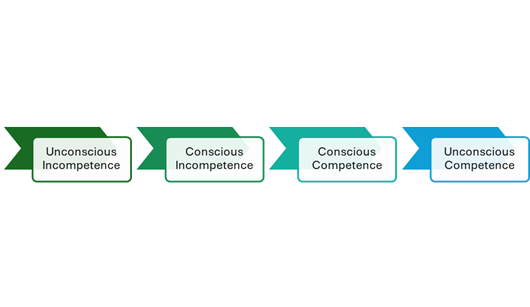
As I was reviewing the video linked above something struck me again, as though for the first time, about Appreciative Inquiry that I believe is also true for strengths development: it is a mindset as well as a method. The strengths mindset is something that is often missed as people discover their talents and build strengths through CliftonStrengths. We often focus on the method of naming, claiming, and aiming our talents, and building more effective partnerships with others. These are essential in appreciating (no pun intended) the value of our talents and building strengths in our lives, ministries, and parishes. There is greater impact when the strengths mindset gradually becomes part of our way of understanding ourselves and the world around us. It can be life-changing for us as individuals, transformative in a profoundly spiritual way, when we become aware of God’s grace in our midst and grow in readiness to respond out of gratitude for all we have been given by becoming more attentive to our talents and gifts and those of the people around us. We become more faithful stewards of our lives, talents and strengths, time, faith, and resources; we look at life through a perspective of abundance rather than scarcity.
This brings me back to the start of my story. I was stuck because I was hyper-focused on other responsibilities. Leaning into my Ideation talent was enough to give me a beginning point for the story, but there is more. Reflecting on our shared strengths experiences and drawing on the wisdom of those who mentored me in the early stages of my strengths journey gave me the strength (again, no pun intended) to proceed. In most situations, our complementary partnerships happen in real time and space as we focus together on the tasks at hand. Sometimes, when we are especially blessed, our relationships and what we learn in those partnerships have lasting impact.
Many years ago, as I was trying to put some of these things into words for the first time, I emailed Curt Liesveld, author of Living Your Strengths and master strengths coach, to ask for his thoughts about this. I explained that it seemed to me that we first must discover and accept our talents in order to build strengths. Then, we explore the ways our strengths already equip us and expand on the experiences of our strengths for the future. We collaborate and partner with others, enhancing projects, ministry, and our communities; and finally, the strengths mindset becomes a way of life. Curt’s reply was profound. He said that yes, in that moment when we are living our strengths, when strengths becomes a way of life, we have moments of “glorious exhilaration,” like God at the moment of creation, saying “Ah, that is good!”
Leisa Anslinger
Ideation | Input | Futuristic | Connectedness | Arranger